Developmental Genomics

Laboratory director

Duboule
Prof. Denis Duboule
  • Full Professor

+41 22 37 96771
4004 (Sciences III)
4, Bvd d'Yvoy
CH-1205 Geneva
Switzerland

Research topics

1.jpg_s200

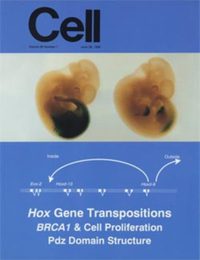
We are interested in the regulatory mechanisms underlying vertebrate pattern formation, in both developmental and evolutionary contexts. For the past years, we have focused on Hox genes, a family of transcription factors that display special paradigmatic values, regarding their regulatory strategies, their functional organization and their key roles in morphological evolution. In the course of the past 8 years, we initiated a large program aimed at genetically dissecting these various aspects of Hox gene biology, either using the potential of established mouse genetic manipulations, or by designing and implementing a powerful strategy relying upon inter chromosomal meiotic recombination (TAMERE) or large chromosomal modifications (STRING).

Currently, a major effort is concentrated on the regulation of Hox gene expression. The past years of work have allowed us to produce the tools necessary to finally evaluate the function of these genes in a variety of developmental contexts. Experiments are also planed to investigate the potential function of this gene family in the course of our morphological evolution.

Regulation of Hox gene expression

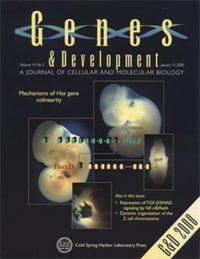
  1. We pursue our efforts to understand the mechanistic basis of colinearity, i.e. the mechanism by which neighboring Hox genes are activated one after the other in overlapping anterior to posterior domains, in the trunk, and proximal to distal domains, in the limbs. The nature of this process is still elusive (even though our systematic approach has started to provide a conceptual framework, at least in limbs) and represents one of the key challenges for our laboratory. The analysis of the many lines of mice either already produced, or in the course of generation, should allow us to bring a definitive answer to this question.
  2. We plan to characterize in details global regulatory controls which were shown to direct expression of groups of genes (shared enhancers) in a variety of structures such as the digits, the external genitalia, the intestinal hernia, the whisker pads or the emerging somites. These enhancer elements are of critical mechanistic and evolutionary importance and will be sought using both a genetic approach in vivo and a large-scale transgenic program using bacterial artificial chromosomes (BACs) tagged with a reporter transposon.
  3. We will design a system of "Hox cluster replacement" whereby given BACs will be used as shuttle to replace the endogenous HoxD cluster in ES cells. Successful replacement will be then introduced in vivo. This methodology (perhaps applicable straight in vivo) should be very helpful to introduce a foreign cluster at the position of HoxD, to modify at will a given cluster by ET recombination of the target BAC in bacteria, or to reconstruct a "minimal Hox cluster"to better study regulatory mechanisms.

2.jpg_s200

The function of Homeobox genes

In parallel, we continue our attempts to unravel the functions of Hox genes by using a series of tools we have constructed over the past years. Because of both the large redundancy observed in this gene family, and compensatory mechanisms, multiple and conditional gene knock-out will be necessary to precisely evaluate the function of these genes.

  1. Conditional gene inactivations will be carried out using the cre/loxP system, primarily on the entire HoxA cluster. This is necessary as the inactivations of at least Hoxa13 and Hoxa1 proved to be lethal.
  2. Various combinations of Hoxd gene gain of function and loss of function produced as a result of our TAMERE approach are currently being evaluated. Preliminary results, as well as a first set of data obtained in limbs, demonstrate the strong potential of- and validate this approach.
  3. Gene profiling analyses will be carried out using the Affymetrix system, to look for target genes of the Hox gene network in well-defined situations, i.e. by using some of our engineered configurations. In particular, target will be looked for in relation to inter-digital spacing, as well as in the context of the ontogenetic relationships between the digits and the external genitalia.

3.jpg_s200

Evolutionary approaches

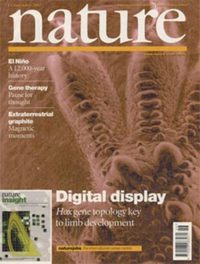
We also continue to explore the involvement of Hox genes in morphological evolution, at the levels of both the modification of regulatory controls, and the resulting variations in the functional deployment of HOX proteins and their impacts upon the emergence of novel structures in the course of vertebrate phylogeny. In relation to this problem, molecular and functional analyses of DNA sequences highly conserved between various taxa are being carried out.

Current team members

Zakany2
Dr Jozsef Zakany
  • Senior Research Associate

+41 22 379 67 88
4003b (Sciences III)
Benedictemascrez
Dr Benedicte Mascrez
  • Associate scientist

+41 22 379 67 77
4009 (Sciences III)
Dr Leonardo Beccari
  • Postdoctoral Fellow

+ 41 22 379 69 01
4013b (Sciences III)
Joostwoltering
Dr Joost Maarten Woltering
  • Postdoctoral Fellow

+41 22 379 67 80
4006 (Sciences III)
Isabel-guerreiro
Ms Isabel Misteli Guerreiro
  • PhD Student

+41 22 379 69 01
4009 (Sciences III)
Mr Julien Codourey
  • Research assistant

+41 379 67 77
4009 (Sciences III)
Huynh
Ms Thi Hanh Nguyen Huynh
  • Research assistant

+41 22 379 67 94
4009 (Sciences III)
Sandraoesch
Ms Sandra Oesch
  • Research assistant

+41 22 379 67 83
4003c (Sciences III)
Matthey
Ms Corinne Matthey-Ebener
  • Secretary

+41 22 379 67 85
4002a (Sciences III)

Publications

Philos Trans R Soc Lond B Biol Sci. 2013 May 6;368(1620):20120367. doi: 10.1098/rstb.2012.0367. Print 2013. Pubmed, 664 KB

Chromatin organization and global regulation of Hox gene clusters.

Montavon T, Duboule D

National Research Centre 'Frontiers in Genetics', School of Life Sciences, Ecole Polytechnique Federale , Lausanne, Switzerland.

Dev Biol. 2013 Mar 14. pii: S0012-1606(13)00133-4. doi: 10.1016/j.ydbio.2013.03.004. Pubmed

Duplications of hox gene clusters and the emergence of vertebrates.

Soshnikova N, Dewaele R, Janvier P, Krumlauf R, Duboule D

Department of Genetics and Evolution, University of Geneva, Sciences III, Quai Ernest-Ansermet 30, 1211 Geneva 4, Switzerland; Institute of Molecular Biology, Ackermannweg 4, 55116 Mainz, Germany.

Curr Top Dev Biol. 2013;104:113-48. doi: 10.1016/B978-0-12-416027-9.00004-8. Pubmed

Chromatin architectures and hox gene collinearity.

Noordermeer D, Duboule D

National Research Centre "Frontiers in Genetics", School of Life Sciences, Ecole Polytechnique Federale, Lausanne, Switzerland.

Proc Natl Acad Sci U S A. 2012 Nov 7. Pubmed, 1.4 MB

Impact of copy number variations (CNVs) on long-range gene regulation at the HoxD locus.

Montavon T, Thevenet L, Duboule D

National Research Centre Frontiers in Genetics, School of Life Sciences, Ecole Polytechnique Federale, 1015 Lausanne, Switzerland.

Curr Biol. 2012 Aug 1. Pubmed, 486 KB

A Genetic Basis for Altered Sexual Behavior in Mutant Female Mice.

Zakany J, Duboule D

National Research Centre "Frontiers in Genetics," Department of Genetics and Evolution, University of Geneva, 1211 Geneva 4, Switzerland.

Trends Cell Biol. 2012 May 2. Pubmed

Landscapes and archipelagos: spatial organization of gene regulation in vertebrates.

Montavon T, Duboule D

National Research Centre Frontiers in Genetics, University of Geneva, Geneva, Switzerland; School of Life Sciences, Ecole Polytechnique Federale, Lausanne, Switzerland.

Dev Dyn. 2012 Feb 7. doi: 10.1002/dvdy.23756. Pubmed

A function for all posterior Hoxd genes during digit development?

Delpretti S, Zakany J, Duboule D

National Research Centre "Frontiers in Genetics," School of Life Sciences, Ecole Polytechnique Federale, Lausanne, Switzerland.

Development. 2012 Jan 25. Pubmed, 2.24 MB

Bimodal control of Hoxd gene transcription in the spinal cord defines two regulatory subclusters.

Tschopp P, Christen A J, Duboule D

Annu Rev Genet. 2011 Dec 15;45:145-66. Pubmed

A genetic approach to the transcriptional regulation of hox gene clusters.

Tschopp P, Duboule D

National Center of Competence in Research, Frontiers in Genetics, Department of Genetics and Evolution, University of Geneva, 1211 Geneva 4, Switzerland.

Cell. 2011 Nov 23;147(5):1132-45. Pubmed, 2.01 MB

A regulatory archipelago controls hox genes transcription in digits.

Montavon T, Soshnikova N, Mascrez B, Joye E, Thevenet L, Splinter E, de Laat W, Spitz F, Duboule D

National Research Centre, Frontiers in Genetics, School of Life Sciences, Ecole Polytechnique Federale, Lausanne, Switzerland.

Science. 2011 Oct 14;334(6053):222-5. Pubmed

The dynamic architecture of Hox gene clusters.

Noordermeer D, Leleu M, Splinter E, Rougemont J, De Laat W, Duboule D

National Research Centre Frontiers in Genetics, School of Life Sciences, Ecole Polytechnique Federale (EPFL), Lausanne, Switzerland.

BMC Dev Biol. 2011 Jul 29;11(1):47. Pubmed

Analysis of the dynamics of limb transcriptomes during mouse development.

Gyurjan I, Sonderegger B, Naef F, Duboule D